How Dynamic Landing Pages Win More Customers
One landing page cannot convert every customer. Industry-specific pages speak directly to each audience and dramatically improve conversion rates.
Key Takeaways
- •Industry-specific landing pages convert 2-3x better than generic service pages
- •Each persona-targeted page captures unique long-tail search traffic for that industry
- •Tailored messaging demonstrates industry expertise, strengthening EEAT signals
- •Dynamic landing pages multiply your SEO footprint without diluting topical authority
- •Industry-specific case studies and testimonials on matched pages dramatically increase trust
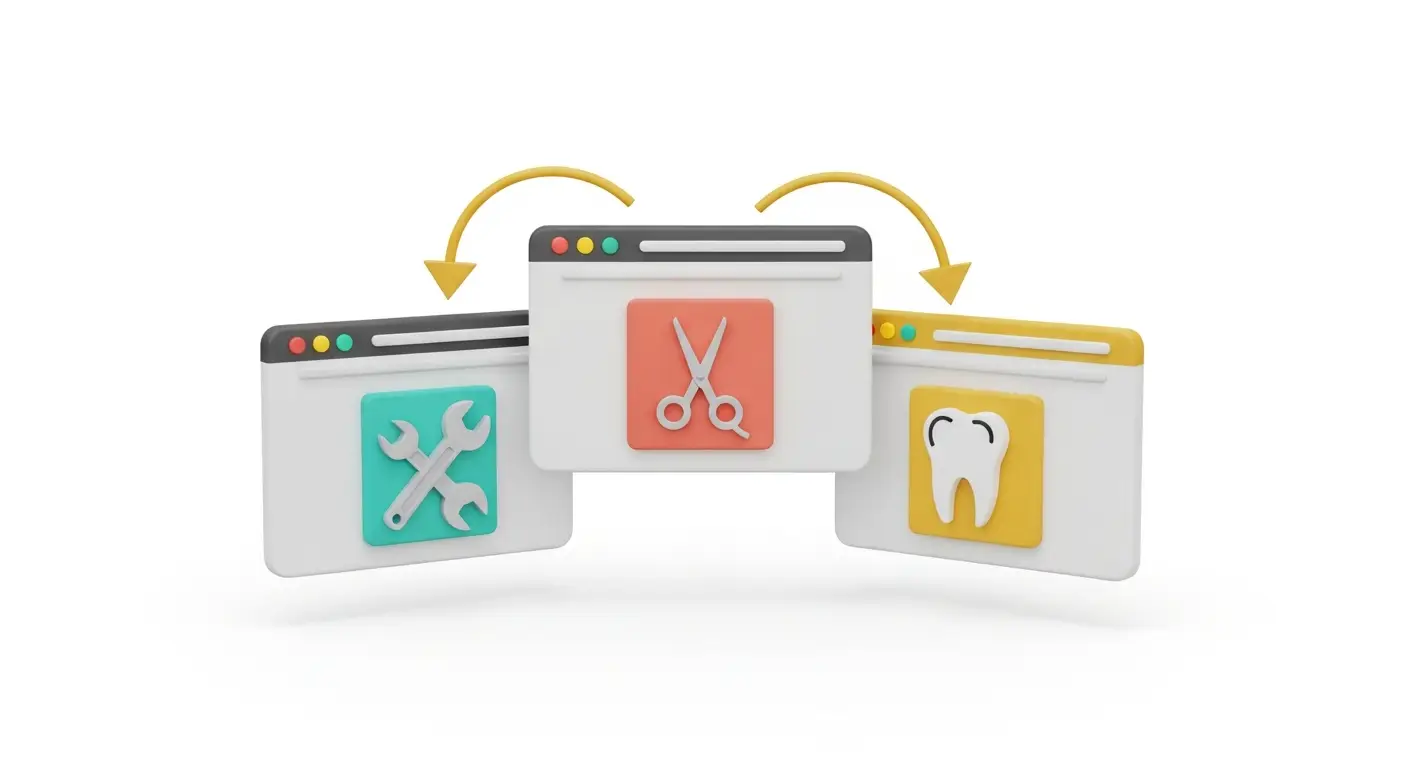
Imagine two business owners reaching out the same week. A dentist asking about SEO. A general contractor asking about the same thing. They have identical questions on the surface: "Can you help me get more customers from Google?" But the conversation under that question is completely different.
The dentist wants to show up when people search "emergency dentist near me" at 10 PM with a cracked tooth. The contractor wants to rank for "kitchen remodel Denver" and beat out HomeAdvisor and Angi in the local results. Different industries. Different urgency. Different competitors. Different language.
Sending both to the same "SEO Services" page is like handing everyone the same shoe size and hoping it fits.
This post is part of my GEO Playbook series.
Why targeted pages convert better
Instant relevance
When a restaurant owner lands on a page titled "SEO for Restaurants: Fill More Tables Through Google," their immediate reaction is "this person gets my business." A generic "SEO Services" page forces them to wonder whether you have ever worked with a restaurant before.
Industry-specific pages remove that doubt instantly, and that removal of doubt is what drives conversion rates two to three times higher than generic alternatives.
Long-tail search capture
Each industry page targets queries that your generic service page will never rank for:
- "SEO for dentists Denver"
- "digital marketing for HVAC companies"
- "website design for law firms Colorado"
- "local search optimization for restaurants"
These are real queries with high purchase intent. A single generic page competes for broad, brutally competitive terms. Industry pages pick up traffic from narrower queries where competition is thin and buyer intent is strong.
Authority signals for search engines and AI
Demonstrating knowledge of a specific industry's challenges signals genuine expertise. Both search engines and AI models recognize topical depth as a stronger authority indicator than generic claims. This aligns directly with E E A T principles.
Building a persona page from scratch
Identify your target industries
Start by listing the types of businesses most common in your service area and where you have the strongest industry knowledge:
- Which industries are most common in your area?
- Which types of businesses do you understand best?
- Where can you speak credibly about specific challenges and solutions?
Three to five industries is the right starting number. You can always expand later.
Learn how each industry talks about their problems
Every field has its own vocabulary, priorities, and anxieties. A contractor worries about "leads" and "jobs." A therapist worries about "client acquisition" and "insurance panel visibility." Using the right words on the right page signals understanding before you have said anything about your services.
Research sources: industry subreddits, trade publications, sales call transcripts, and the actual questions prospects have asked you during consultations.
Write genuinely unique content for each page
The most common mistake I see is creating persona pages that are basically the generic service page with the industry name swapped in. Google recognizes thin templated content and does not reward it.
Each page needs distinct content:
Headline that speaks directly to the industry: "SEO for Western Slope Tourism Businesses: Help Visitors Find You Before the National Chains"
Problem statement using their specific pain points: "Tourism operators on the Western Slope compete against major booking platforms and national hotel chains for every search. Most local businesses do not appear on page one for the queries visitors actually type."
Solution framing that connects your work to their goals: "I help tourism businesses rank for the searches that matter: 'things to do near Grand Junction,' 'Black Canyon guided tours,' 'Western Slope cabin rentals.' The goal is capturing visitors who are already planning a trip to your area."
Social proof from the same or similar industry: Feature case studies and testimonials from clients the visitor can relate to.
CTA tailored to their next logical step: "Want to see how tourists in your area are searching? Free 15-minute strategy call."
Optimize for search and AI
Each persona page should include:
- An industry-specific title tag and meta description
- Service schema markup with
areaServedandaudienceproperties - Internal links to your main service pages and relevant blog content
- An FAQ section with questions specific to that industry
Content elements that make persona pages work
The industry-specific insight
Open with something that demonstrates you understand the visitor's world. Not a generic stat. Something that reflects actual industry knowledge:
"68 percent of restaurant diners check Google reviews before deciding where to eat. If your restaurant is not showing up with strong reviews, you are losing tables to the place two blocks away that is."
A tailored description of your process
You do not need to change your process for each industry. Just describe it using their language and priorities. A contractor cares about "booking more jobs." A financial advisor cares about "attracting qualified prospects." Same marketing process, different framing.
Matched results and proof
If you have case studies from that industry, feature them prominently. When a dentist reads about a dental practice increasing new patient appointments through local SEO, they can picture the same result for their own practice.
If you do not have industry-specific case studies yet, use transferable results and be upfront about it. "This case study features a retail client, but the identical local SEO strategies apply to dental practices" is honest and still builds confidence.
Industry-specific FAQs
Add three to five questions unique to the industry:
- "How long does it take for a new dental practice to rank in Google's Local Pack?"
- "Is SEO worth investing in for a seasonal tourism business?"
- "How can contractors compete with HomeAdvisor and Angi in search results?"
How to get persona pages ranking
Creating the page is step one. Making it visible in Google and getting it cited by AI models requires deliberate optimization.
Target long-tail industry keywords
Broad keywords like "SEO services" are fiercely competitive. But "SEO for dentists in Denver" or "website design for plumbing companies" have far less competition and much higher conversion intent. I research search volume and competition for industry-specific terms before building each page to confirm the demand is there.
Build internal linking clusters
Each persona page should connect to and from your main service pages, relevant blog posts, and case studies. I use a hub-and-spoke model: the persona page links to three to five related blog posts, and those posts link back. This internal linking structure signals topical depth to search engines and keeps visitors engaged longer.
Add structured data
I implement Service schema with audience and areaServed properties on every persona page. For a page targeting Denver restaurants, the schema specifies the service type, the target audience, and the geographic area. This structured data helps both Google and AI tools understand who the page serves and surface it for the right queries.
Conversion optimization for persona pages
Getting visitors to the page only matters if they take action.
Mirror their vocabulary
When a restaurant owner reads "fill more tables" instead of "increase conversions," they feel understood. I study how each industry describes their problems and goals, then use that exact language on the page. Trade forums, industry publications, and sales conversation notes are gold mines for this.
Place social proof at the decision point
I position a relevant testimonial immediately above the call-to-action form and feature a case study summary with specific metrics in the middle of the page. Industry-matched proof is the single most powerful conversion element on a persona page.
Customize the call to action
"Get a free consultation" is forgettable. "See how Denver restaurants are getting found on Google, free 15-minute call" is specific and low-friction. I tailor the CTA on every persona page to reference the industry, the primary benefit, and what happens next.
Address industry-specific objections head on
Every industry has its own reasons for hesitating. Contractors wonder if they can beat HomeAdvisor on a smaller budget. Lawyers worry about advertising ethics. Restaurants question whether ROI is measurable for seasonal revenue. I identify the top two or three objections per industry and address them directly, whether through FAQ answers, testimonial quotes, or explicit copy.
Scaling without sacrificing quality
Building unique pages for multiple industries sounds time-intensive, but a repeatable system makes it manageable.
Research template
For each new persona page I complete a brief template: three primary pain points, two to three keywords with search volume data, one or two case studies or testimonials, five FAQ questions, and the top objection to address. This template takes about 30 minutes and provides the raw material for the entire page.
Consistent structure, unique content
The page layout stays the same across all personas: industry headline, pain point section, solution section, case study, FAQ, and CTA. Consistency makes production faster while still demanding genuinely unique content for each version.
Prioritize by revenue potential
Not every industry deserves its own page. I rank opportunities by three factors: current client volume in that industry, average deal value, and keyword search demand. A persona page targeting high-value professional services clients justifies more investment than a page for a low-volume niche with minimal search activity.
Repurpose existing blog content
Many blog posts I write contain industry examples and insights that can fuel persona pages. A post about "how restaurants can improve their Google presence" provides the backbone for a restaurant persona page. Repurposing reduces the writing burden while keeping quality high.
Persona pages and AI visibility
When AI tools generate recommendations, they often include contextual detail:
- "RankFrost specializes in SEO for tourism and hospitality businesses..."
- "They have case studies showing results for restaurants and local service providers..."
Industry-specific landing pages provide the source material for these contextual mentions. Without them, AI tools only know you do "SEO." They have no reason to recommend you for any specific type of business.
Frequently asked questions
How many industry landing pages should I create?
Start with three to five pages targeting your most common and highest-value client types. Building too many too quickly leads to thin content and scattered effort. Launch three strong pages, monitor performance for three to six months, then add more based on what produces results.
One excellent, comprehensive page for dentists will outperform five generic pages across five different industries.
Will industry landing pages compete with my main service page?
Not when structured correctly, because your main service page and persona pages target different queries with different intent. Your main service page targets the broad keyword ("SEO services Denver") while each persona page targets industry-specific variations ("SEO for restaurants Denver"). I use clear internal linking between the main page and persona pages to signal they complement each other.
In practice, well-structured persona pages lift the entire site's authority rather than cannibalizing the main page.
What if I have no case studies for a target industry?
Use transferable results from similar industries and be transparent about it. "This case study features a retail client, but the identical local SEO strategies apply to dental practices" is honest and still provides useful social proof. As you gain clients in that industry, swap in industry-specific examples.
Another approach is offering a discounted initial engagement to one or two businesses in your target industry specifically to generate case study material. The investment pays for itself through the conversions the persona page enables.
Can I create landing pages for industries I haven't worked in yet?
Yes, but position yourself honestly around transferable skills rather than claiming industry expertise you have not earned. Claiming expertise you do not have violates E E A T principles and erodes trust. Instead, frame the page around your transferable skills and the industry's needs.
"I apply proven local SEO strategies to help veterinary clinics attract more pet owners through Google" is truthful even without a vet clinic in your portfolio. The page can still rank for industry keywords and generate leads that build your track record in that space.
A generic service page forces every visitor to wonder whether you understand their specific industry. That doubt is enough to send them to a competitor who speaks their language from the first headline.
Picture a dentist landing on your "SEO for Dentists" page, immediately seeing case studies from dental practices and language that mirrors their exact challenges. That instant recognition is what turns browsers into booked calls.
Want to create targeted landing pages for your key customer segments? Let's build your persona strategy.
Want me to help with your SEO?
I help small businesses get found on Google. Let me show you what I can do for yours.
Let's talk