Rank for Your Neighborhood, Not Just Your City
Most local SEO stops at the city level. Going deeper into specific neighborhoods, communities, and micro regions captures search traffic competitors miss.
Key Takeaways
- •Neighborhood-level targeting captures search traffic that city-level SEO misses completely
- •Creating location-specific landing pages for each service area dramatically increases local visibility
- •Hyperlocal content builds stronger connections with community members
- •Google's AI increasingly understands neighborhood and micro-region context
- •Service area businesses benefit most from granular geographic targeting
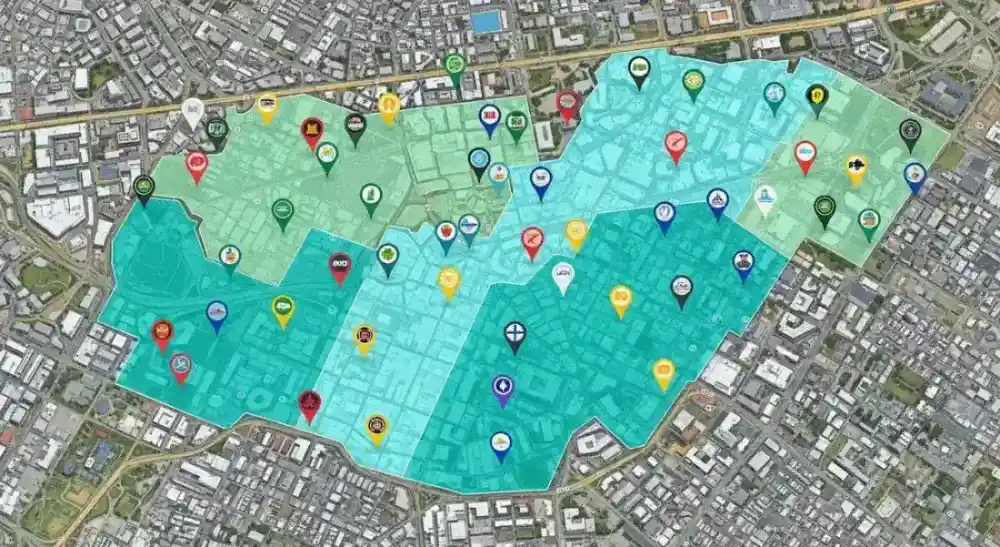
Roughly 46 percent of all Google searches have local intent. Most businesses respond to that statistic by optimizing for their city name and calling it done. "Electrician in Denver." "Dog walker Denver CO." And then they compete against every other business in a metro area of three million people for that same handful of keywords.
Meanwhile, real people are typing things like "electrician near Sloan's Lake" and "dog walker Wash Park area." Those searches have less competition, higher purchase intent, and almost nobody is specifically optimizing for them. That gap is where neighborhood-level SEO creates outsized results.
This post is part of my Ultimate Local SEO Checklist series.
Why going granular works so well
The competition drops off a cliff
Every business in Denver targets "Denver." Very few target Cherry Creek, Capitol Hill, or Green Valley Ranch individually. That means:
- Lower keyword difficulty across the board
- Pages can rank much faster
- The traffic you attract is more qualified and more likely to convert
Relevance jumps dramatically
When someone searches "house cleaning near Stapleton," they want a cleaner who knows the neighborhood, who's worked in those floor plans, who can get there quickly. If your content demonstrates that familiarity, you immediately separate yourself from the generic "Denver house cleaning" competitors.
Purchase intent is stronger
People who search at the neighborhood level are typically further along in their decision-making process. They've already decided they want the service. They're narrowing down to someone nearby. That's the best kind of traffic to earn.
How I implement neighborhood targeting
Map your micro regions
Start by listing every neighborhood, community, subdivision, and geographic area within your service territory. For a Denver-based business, this might include:
- Individual neighborhoods (Baker, RiNo, Montbello, Virginia Village)
- Adjacent suburbs and towns (Lakewood, Englewood, Westminster, Thornton)
- Geographic regions (the Highlands area, South Denver corridor, Tech Center area)
- Community reference points (near Sloan's Lake, close to Cherry Creek Mall)
Build location-specific service pages
For each major service, create a page targeting each significant micro region. These cannot be thin templates with the city name swapped out. Google penalized that approach years ago. Each page needs genuinely unique content about serving that specific area.
A house cleaning service, for example, might create:
- House Cleaning Services in Cherry Creek
- Move-Out Cleaning for Capitol Hill Apartments
- Recurring Home Cleaning in Highlands Ranch
Each page addresses the specific housing styles, customer needs, and neighborhood characteristics of that area.
Develop hyperlocal content
Blog posts and guides that speak to specific neighborhoods build topical authority for those geographic terms:
- "Why Wash Park Homeowners Are Switching to Eco-Friendly Cleaning Services"
- "Preparing Your RiNo Loft for Airbnb Season"
- "The Capitol Hill Renter's Guide to Getting Your Deposit Back"
This type of content builds genuine connections with community members while targeting valuable long-tail searches.
Optimize your Google Business Profile
Your Google Business Profile should accurately reflect where you work. Use the service area feature to define the specific neighborhoods and communities you serve. When you publish GBP posts, reference these areas naturally.
Content ideas that drive neighborhood traffic
Local market analysis
"What Denver Business Owners Should Know About the Highlands Boom" is the type of article that demonstrates both local knowledge and industry expertise. It positions you as someone embedded in the community, not just someone buying ads there.
Community spotlights
Featuring local businesses, events, or neighborhood developments shows genuine involvement. A carpet cleaner who writes about the new dog park opening in Stapleton creates natural geographic associations that Google picks up on.
Area-specific guides
"A Homeowner's Maintenance Calendar for Older Homes in Washington Park" is valuable, specific, and targets geographic terms naturally. Nobody else is writing content like this.
Seasonal local content
"How to Prepare Your Highlands Ranch Home for Colorado's Spring Hail Season" is timely, relevant, and geographically precise. It answers a question that real people in that specific area actually have.
Building neighborhood pages that Google rewards
I've audited competitors who created 30 nearly identical pages, each with a different city name dropped in. Google caught all of them. Several were deindexed entirely. Proper neighborhood pages require effort, but the payoff justifies it.
Write unique content for each area
Every neighborhood page needs information that would only apply to that specific place. When I write a page about cleaning services in Capitol Hill, I talk about the older apartment buildings, the tenant turnover rates, the narrow parking situations for service vans. Those details wouldn't make sense on a page about Highlands Ranch, where the housing stock and customer concerns are completely different.
Include area-specific data
Real data makes your pages genuinely useful and hard for competitors to replicate:
- Population and growth numbers for the area
- Housing stock characteristics (average age, typical sizes)
- Density of competing businesses
- Local search volume trends for your services
Feature local testimonials
If you've served a customer in that neighborhood, put their testimonial on the corresponding page. Nothing builds credibility faster than a neighbor confirming your work is solid. This connects to using social proof and testimonials effectively across your site.
Add neighborhood-specific schema
Include the areaServed property in your LocalBusiness schema listing each neighborhood and micro region. You can also use GeoCircle or GeoShape markup to define exact service area boundaries. This gives search engines precise geographic context about where you operate.
Technical details that matter
URL structure
Keep URLs clean and descriptive:
/services/house-cleaning/cherry-creek//services/carpet-cleaning/highlands-ranch/
Schema markup
Add areaServed to your LocalBusiness schema for each neighborhood and micro region you serve.
Internal linking
Link neighborhood pages to your main service pages and link service pages back down to neighborhoods. This distributes authority and helps Google understand the geographic scope of your services. My guide on internal linking as a free SEO strategy covers the full approach.
Local citations
Build citations that include your service area information, not just your primary address.
Mistakes that will actually hurt you
I see the same errors over and over, and they can set you back rather than push you forward.
Doorway pages
Creating 40 pages that say the same thing with a different neighborhood name plugged in is a doorway page strategy. Google penalizes it actively. Each page must offer genuinely unique, valuable content. If you can't write something real about a specific area, skip it.
Ignoring mobile users
Most neighborhood-level searches happen on phones. Someone walking through LoDo typing "coffee shop near me" is on a five-inch screen. Your location pages need fast load times, clean mobile layouts, and tap-to-call buttons. I cover mobile optimization in my mobile-first indexing guide.
Neglecting Google Maps
Neighborhood SEO extends beyond your website. Your Google Business Profile needs accurate service areas configured. Your Maps listing needs to appear for neighborhood-specific searches. Double check that your GBP service areas match the neighborhoods you're actually targeting with content.
Over-optimized anchor text
When you link to neighborhood pages from elsewhere on your site, vary the anchor text naturally. Stuffing every link with "house cleaning Cherry Creek Denver Colorado" triggers Google's over-optimization filters and can actually push you down instead of up.
Measuring what's working
Track rankings and traffic for each micro region independently:
- Keyword rankings for "[service] + [neighborhood]" combinations
- Organic traffic to individual location pages
- Phone calls and form submissions by geographic origin
- Google Business Profile insights filtered by area
Setting up proper tracking
Use UTM parameters on your neighborhood pages to track which areas generate the most leads in Google Analytics. Create separate conversion goals for each location page to measure performance by neighborhood. This data tells you where to invest more effort and where the market might be saturated.
Why this creates a real competitive advantage
Based on industry observations, fewer than 5 percent of local businesses invest in any form of neighborhood-level SEO. The businesses that do tend to dominate their local search results because they're often the only relevant result for neighborhood-specific queries.
Once you've built out quality content and optimization for 15 or 20 micro regions, a competitor would need to replicate all of that work from scratch to catch up. That's a genuine competitive moat.
Frequently asked questions
How many location pages should a local business create?
Start with 5 to 10 of your highest-value service areas where you get the most work or where search demand is strongest. Quality always outweighs quantity. I would rather see 8 excellent neighborhood pages than 40 thin ones. Expand gradually as you develop genuinely unique content for each new area.
Do location pages hurt my main city page rankings?
No, location pages actually strengthen your city-level page when structured correctly as a hub-and-spoke model. Your city-level page acts as the hub, with neighborhood pages linking up to it and the city page linking down to neighborhoods. This creates a clear hierarchy that Google understands, adding topical depth and geographic specificity.
How fast do neighborhood landing pages start ranking?
I typically see neighborhood pages showing up in search results within 4 to 8 weeks, with meaningful traffic arriving around 3 to 4 months. Because competition is so much lower at the neighborhood level compared to city-level terms, these pages frequently rank faster than your broader geographic pages.
Should I create location pages for areas I rarely serve?
Only if you genuinely work in those areas and can write authentic content about them. Targeting a neighborhood 30 miles away that you've never actually visited will show in your content quality. Readers will notice the lack of specifics, and it won't convert even if it ranks. Stick to areas where you have real experience and genuine local knowledge.
Without neighborhood-level targeting, you are competing against every business in your metro area for the same handful of broad keywords. The customers searching for help in their specific part of town never find you.
Imagine showing up first every time someone in Cherry Creek, Capitol Hill, or Highlands Ranch searches for the service you provide. That hyper-local visibility delivers the kind of traffic that converts because those searchers are ready to hire someone nearby.
If you want to explore what neighborhood-level targeting could do for your business, let's talk strategy.
Want me to help with your SEO?
I help small businesses get found on Google. Let me show you what I can do for yours.
Let's talk