How to Convert Visitors Coming From AI Search
Visitors from AI search engines behave differently than organic visitors. Here is how to adapt your calls to action and conversion strategy.
Key Takeaways
- •AI-referred visitors arrive with higher baseline trust because an AI has already endorsed you
- •These visitors are typically further along in their decision-making process
- •CTAs for AI-referred visitors should reduce friction rather than build awareness
- •Social proof elements are especially effective for visitors who were recommended by AI
- •The landing page experience must match the context of the AI recommendation
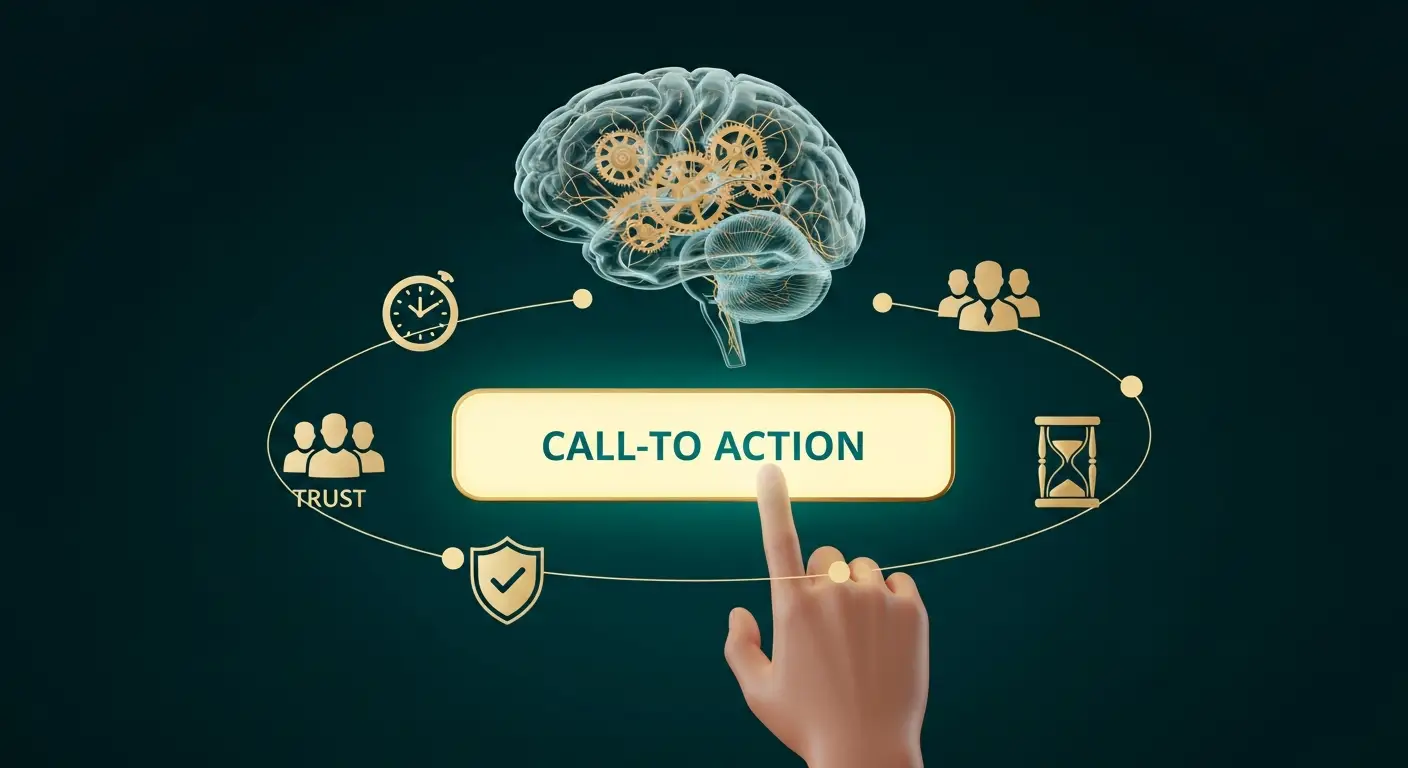
Picture this scenario. Someone in Denver asks ChatGPT: "Who's a good SEO consultant for businesses in Colorado?" The AI responds with a few names and yours is among them. That person clicks through to your website. They've already been told you're worth considering by a system they trust. They arrive with a specific need, a pre-formed expectation, and a higher willingness to act than almost any other type of visitor.
Now picture the typical business website they land on. A generic "Contact Us" button. A homepage full of "Learn More About Our Services." Awareness-stage messaging designed for someone who doesn't know what they need yet.
There's a massive disconnect, and it's costing businesses conversions every day. AI-referred visitors are a fundamentally different audience, and converting them requires understanding the psychology of how they arrive.
This post is part of my E E A T Framework guide series.
What makes AI-referred visitors different
The behavior of visitors who arrive through AI recommendations from ChatGPT, Claude, and Google AI Overviews follows distinct and consistent patterns based on early industry research.
They skip the awareness stage
Traditional marketing funnels describe a journey from awareness to consideration to decision. AI-referred visitors often bypass the first stage entirely. They already know they need SEO help (or plumbing, or legal advice, or whatever your service is). The AI has already framed the problem and suggested you as a solution. They're arriving in the middle of the funnel, sometimes near the bottom.
This means all that top-of-funnel content on your homepage, the "What is SEO?" explainer, the overview of why your industry matters, is irrelevant to them. They need validation and a clear path to action, not education.
They carry implicit trust
Being recommended by an AI system functions like a referral from a knowledgeable friend. The visitor's internal monologue is something like: "If ChatGPT thinks this person is good, there's probably something to it." That's a meaningful psychological head start.
But here's the flip side. Because they arrive with elevated trust, anything on your site that contradicts or undermines that trust hits harder. A sloppy page, a vague service description, stock photography that screams "template" will erode the AI's endorsement faster than it would disappoint a cold organic visitor.
They're ready to evaluate specifics
These visitors aren't browsing casually. They want to quickly confirm three things: does this business do what the AI said they do, are they actually good at it, and how do I take the next step? If your site answers all three within 30 seconds, you're in excellent shape. If it doesn't, they'll go back to the AI and click the next recommendation.
Redesigning CTAs for AI traffic
The standard calls to action on most business websites are built for awareness-stage visitors. "Learn More." "Discover Our Services." "Contact Us." These are fine for someone early in their research. For an AI-referred visitor, they're a missed opportunity.
Lower the commitment barrier
These visitors don't need to be convinced that your service category matters. The AI already did that. They need to be convinced that you specifically are the right choice. Your CTAs should reflect this:
Instead of "Learn More About SEO," use "Get Your Free Site Audit" or "See What's Holding Your Rankings Back."
Instead of "Contact Us," use "Book a 15-Minute Call. I'll review your site and share 3 specific improvements."
The second version in each pair sets a clear expectation, reduces ambiguity, and makes the commitment feel manageable.
Be explicit about what happens next
AI-referred visitors are action-oriented. Vague CTAs create psychological friction because the person doesn't know what they're committing to. Will they get a sales call? A questionnaire? An automated email?
Spell it out. "Click here to schedule a 15-minute video call. I'll look at your website beforehand and come prepared with specific observations." That removes uncertainty, which is the enemy of conversion.
Mirror the AI's framing
If AI tools recommend you for "local SEO for Denver businesses," your landing page better say those exact words above the fold. Any mismatch between the AI's recommendation and what the visitor finds on your site creates cognitive dissonance. The visitor expected one thing and got another. That dissonance kills conversions even when the mismatch is minor.
I recommend auditing your site specifically for this alignment. What are AI tools actually saying about you? Is your site consistent with those descriptions?
The psychology of double endorsement
Social proof is effective for any visitor, but it operates at a different level for AI-referred traffic. The psychology works like this:
- The AI recommended you (first endorsement from a trusted source)
- Your testimonials and case studies confirm you deliver (second endorsement from actual customers)
- Two independent endorsements from different sources are exponentially more convincing than one
This is why placing social proof immediately adjacent to CTAs on pages that receive significant AI referral traffic is so effective. When someone is hovering over "Book a Call," seeing a specific, verifiable testimonial right next to that button provides the final push.
What kinds of proof work best
- Specific results with numbers: "Went from page 4 to the top 3 in four months" beats "Great experience" every time
- Relevant industry testimonials: Match the proof to the service the visitor most likely arrived for
- Volume signals: Review counts alongside ratings show breadth of experience
- Named clients or recognizable logos: With permission, these add verifiability
Landing page design for AI-referred traffic
Beyond CTAs, the entire page experience needs to account for this audience.
Confirm immediately
The top third of your landing page should validate why the visitor is there. If they came because an AI recommended you for local SEO in Denver, the headline should say something very close to "Local SEO for Denver Businesses." No clever wordplay. No abstract branding language. Direct confirmation.
Below that, a subheadline with a specific credential or verifiable fact. Something like "Denver SEO consultant specializing in local search for businesses." This immediately validates the AI's recommendation with concrete information.
Demonstrate depth quickly
AI-referred visitors expect expertise because a machine just told them you're an expert. Superficial content creates a gap between expectation and reality. Skip the basic explanations and show your knowledge through:
- Specific methodology descriptions
- Real numbers from past projects with client permission
- Technical details that prove depth
- Case studies that document the full arc from problem to solution
Make the next step impossible to miss
The CTA should be visible without scrolling. Then repeated after each major section. I typically include three to four CTA instances on a landing page: one above the fold, one mid-page after social proof, one near the bottom after detailed content, and sometimes one in a sticky header or footer on mobile.
Minimize form fields
Every field you add to a contact form reduces completions. For AI-referred visitors who are already pre-qualified, keep it minimal. Name. Email or phone. A brief description of what they need. That's it. You'll gather details on the call.
The trust bridge concept
I think of a website as a bridge between the AI recommendation and the client relationship. The AI got the visitor to your door. Your site needs to do three things in sequence:
- Confirm the AI's assessment. Yes, you do exactly what the AI said you do.
- Deepen the trust. Show proof that goes beyond what the AI could have known.
- Facilitate action. Make the next step obvious, specific, and low-risk.
If any of these three stages fails, the visitor leaves, often back to the AI to click the next suggestion. And you may never get a second chance with that person.
Building AI-optimized landing pages
Beyond adapting existing pages, there's a strong case for designing landing page layouts specifically optimized for AI referral traffic.
The confirmation-first layout
The page opens with three elements, no more:
- A headline that mirrors the language AI tools use when recommending you
- A subheadline with one specific credential or result
- A primary CTA button above the fold
This layout respects the fact that AI-referred visitors already know what they want. They don't need a preamble. They need immediate confirmation and a clear path.
Content depth below the fold
Once the visitor scrolls (and if you've done the top section right, they will), give them the expertise they expect. Methodologies you use. Real project outcomes. Technical knowledge that proves you're not just a pretty website. This deeper content serves two purposes: it converts visitors who need more evidence, and it gives AI models richer information to cite in future recommendations.
Mobile readiness is critical
A large portion of AI referral traffic comes from mobile devices. People ask questions of AI assistants on their phones while walking, driving, or sitting in waiting rooms. Your landing page must work perfectly on small screens.
- Touch-friendly buttons with minimum 44px tap targets
- Click-to-call phone numbers
- Forms that are easy to complete with thumbs
- Fast loading times (poor INP scores will destroy your mobile conversion rate)
Advanced CTA psychology
Once the basics are solid, these techniques squeeze additional performance from AI-referred traffic.
The micro-commitment ladder
Rather than asking for a big commitment immediately, offer a series of smaller steps. Each one builds engagement and makes the next feel natural.
- "Download my free SEO checklist" (low commitment, high value)
- "Get a free 5-minute site audit" (medium commitment)
- "Schedule a 15-minute strategy call" (higher commitment)
For AI-referred visitors who already have elevated trust, you can often start at step two. They don't need as much warming up.
Honest urgency
AI-referred visitors respond to genuine scarcity but see through fake manipulation instantly. Countdown timers and "only 2 spots left!" tactics feel cheap and undermine the trust the AI built.
Real urgency examples that work:
- "I work with 3 new clients per month to maintain quality" (capacity-based)
- "Google's March algorithm update is approaching, so getting ahead matters" (event-based)
- "Your competitors are already investing in this" (competitive)
These are honest, verifiable, and create a legitimate reason to act without feeling like a pressure tactic.
Tracking AI referral conversions
Measuring AI-referred traffic requires some detective work because it shows up differently depending on the source.
Perplexity typically includes identifiable referrer data. ChatGPT shared links may appear as direct traffic. Google AI Overview clicks show up in Search Console. I set up custom segments in Google Analytics to isolate each AI source separately.
The metrics I focus on for AI-referred visitors:
- Time to conversion: Should be shorter than organic visitors because they arrive ready to act
- Scroll depth: Reveals how much validation they need before committing
- CTA click rate by position: Shows which placement converts best
- Form completion rate: Identifies if you're losing them in the form
- Phone call rate: AI-referred visitors often prefer calling over filling out forms
Reviewing this data monthly and running A/B tests on pages that get the most AI traffic is essential. Even a 2 percent improvement in conversion rate is significant because AI referral traffic tends to convert at higher lifetime values.
Frequently Asked Questions
How do I track AI referral traffic in analytics?
It requires a combination of signals since there's no universal standard yet for identifying AI-referred visitors. Perplexity includes referrer data. Google AI Overview clicks may show specific parameters in Search Console. ChatGPT referrals are trickier; look for patterns like direct traffic visitors who land on a specific service page and convert quickly.
Setting up UTM parameters on any links you control helps with attribution. The tracking landscape is still maturing, so I review methods quarterly as platforms evolve.
Do I need separate landing pages for AI traffic?
Usually not, because separate pages fragment your SEO authority and create unnecessary maintenance burden. Instead, optimize your existing service pages to serve both organic and AI-referred visitors effectively. The techniques that convert AI traffic (clear headlines, specific credentials, prominent CTAs, relevant social proof) also improve conversion from traditional search. One well-built page beats two mediocre ones.
What is the conversion rate for AI search traffic?
Early industry data suggests AI-referred visitors convert at roughly 1.5 to 2.5 times the rate of non-branded organic visitors. The elevated trust and pre-qualification explain this. However, conversion rates vary enormously based on page quality.
A strong match between the AI recommendation and the landing page experience produces excellent numbers. A mismatch can actually perform worse than regular organic traffic because the expectation gap is so jarring.
How do I get AI to recommend my business?
AI recommendations stem from semantic consistency, content quality, and verifiable brand presence across multiple platforms. Make sure your business is described consistently everywhere. Publish genuinely helpful content that demonstrates hands-on expertise. Build social proof that AI systems can verify.
Implement proper schema markup so machines can understand your entity clearly. The more confidently an AI can verify what you do and how well you do it, the more likely it is to recommend you.
If your site treats AI-referred visitors the same as cold traffic, you are wasting the highest-intent clicks you will ever receive. Those visitors came ready to act, and a generic page sends them straight to your competitor.
Imagine every AI recommendation leading to a landing page that confirms their expectations, validates your expertise, and makes the next step effortless. That is how you turn an AI endorsement into a paying client.
Want to optimize your site for AI-referred conversions? Let's talk about your conversion strategy.
Want me to help with your SEO?
I help small businesses get found on Google. Let me show you what I can do for yours.
Let's talk